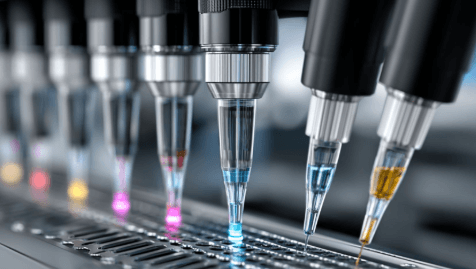
Laboratory work demands precision, accuracy, and reliability, particularly when handling small volumes of liquids. Among the essential tools used in scientific research and clinical laboratories, laboratory pipettes occupy a critical position. They are indispensable for transferring exact amounts of liquid, essential for consistent experimental results and successful outcomes in various analytical procedures.
Understanding Laboratory Pipettes
Laboratory pipettes are precision instruments designed for the accurate measurement and transfer of liquid volumes. They are widely utilised across multiple scientific disciplines, including molecular biology, biochemistry, pharmacology, and clinical diagnostics. The ability to handle micro and macro volumes of liquid with high accuracy makes pipettes fundamental in day-to-day laboratory tasks.
The core functionality of a pipette is to aspirate a specific volume of liquid and subsequently dispense it into another container. This task requires meticulous control over volume settings and consistent technique to minimise user-induced errors. Laboratory pipettes come in a variety of designs, including manual air displacement pipettes, electronic pipettes, and positive displacement pipettes, each catering to specific application needs.
Types of Laboratory Pipettes
A comprehensive understanding of the available types of laboratory pipettes is necessary to select the appropriate tool for a given application. The most commonly used pipettes include:
Air Displacement Pipettes
These are the most prevalent laboratory pipettes, operating by creating an air cushion that pushes liquid in and out of the tip. Precision is achieved through adjustable volume settings and ergonomic design. Air displacement pipettes are suitable for transferring aqueous solutions and samples that do not require specialised handling.
Positive Displacement Pipettes
Utilising direct contact between the piston and liquid, positive displacement pipettes provide superior control for highly viscous or volatile substances. This makes them ideal for use with organic solvents and biological samples that might evaporate or have high surface tension.
Electronic Pipettes
These pipettes include a motorised mechanism to control liquid aspiration and dispensing more precisely, enabling programmable functions and minimising repetitive strain on the user. Electronic pipettes are well suited for high-throughput laboratories where efficiency and consistency are paramount.
Key Features of Laboratory Pipettes
High-quality laboratory pipettes encompass several critical features that ensure accuracy, ease of use, and durability:
- Volume Range: Depending on the type, pipettes cover volume ranges from microlitres (μl) to millilitres (ml), allowing flexibility for varying experimental requirements.
- Calibration: Regular calibration is necessary to maintain accuracy and traceability in laboratory measurements.
- Ergonomics: Designs focus on reducing user fatigue, incorporating features such as lightweight construction and comfortable grips.
- Autoclavability: Components such as pipette shafts and tips are often autoclavable, permitting sterilisation to prevent cross-contamination.
- Tip Compatibility: Universal or brand-specific tips improve the seal quality and reduce the risk of leakage.
Applications of Laboratory Pipettes
Laboratory pipettes find applications in diverse fields. In molecular biology, precise pipetting is critical for assays like PCR, where small-volume reagent preparation influences amplification success. In clinical laboratories, accurate pipetting impacts diagnostic tests such as enzyme-linked immunosorbent assays (ELISAs) and blood analyses.
Pharmaceutical development relies heavily on pipettes for dose preparation and drug formulation testing. Moreover, academic research laboratories utilise pipettes for various experimental procedures, emphasising reproducibility and consistency, which are essential for scientific progress.
Maintaining Accuracy and Precision
Proper pipetting technique is crucial for maintaining measurement consistency. Calibration of pipettes on a scheduled basis ensures that volume delivery remains within acceptable limits. Laboratories may engage professional services or use internal weight calibration methods to monitor pipette performance.
Additionally, the use of high-quality consumables, such as pipette tips compatible with the pipette model, reduces the risk of sample contamination or loss. Ensuring the cleanliness of pipettes and tips further contributes to accurate sample handling.
Choosing the Right Laboratory Pipettes
When selecting laboratory pipettes, it is important to assess the volume range required for the intended tasks and the nature of the liquids being handled. For routine aqueous solutions, manual air displacement pipettes are typically appropriate. In contrast, for viscous, volatile, or hazardous liquids, positive displacement pipettes offer better reliability.
Laboratories that require high throughput and repetitive pipetting should consider investing in electronic pipettes to enhance efficiency and reduce manual errors. In all cases, adherence to best practices in pipette use and maintenance is essential.
See also: Exploring Australia’s Real Estate Market with PropCheck.com.au
Procurement of Laboratory Pipettes
Acquiring laboratory pipettes from reputable suppliers ensures the availability of reliable and precise instruments. Organisations should also consider after-sales support, availability of calibration services, and the compatibility of consumables when selecting suppliers.
For those interested in exploring a broad selection of high-quality options, the laboratory pipettes category available at Techpack provides an extensive range of models designed for various applications and budgets.
Conclusion
The use of laboratory pipettes is integral to achieving accurate and reproducible results in scientific and clinical laboratories. Understanding the types, features, applications, and maintenance of pipettes empowers laboratory professionals to optimise their experimental procedures effectively.
Employing the correct pipette, supported by proper calibration and technique, ultimately enhances the quality of laboratory data, contributing significantly to scientific advancements and reliable diagnostic outcomes.